
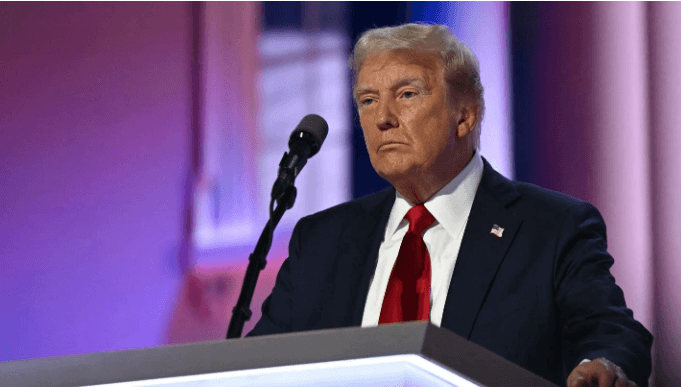
In a seeming effort to cater to undecided last-minute voters, former U.S. President Donald Trump has announced two new tax deductions he’ll try to implement if he gets elected. Here’s what you need to know.
Ending double taxation for overseas citizens
In a video on his website, Trump said he wants to take care of Americans living abroad by ending double taxation for overseas citizens.
What he’s alluding to is the fact that Americans who live outside of the U.S. pay income tax both to the U.S. and to the country in which they currently live. But there are a several of ways to get out of paying income taxes twice.
One is to apply for an exemption, known as the foreign earned income exclusion, in which your income can be excluded up to a certain point. In 2024, that number is $126,500. Another is to use foreign tax credits to reduce your tax bill, but this is only an option if your country of residence has a tax treaty with the U.S. Places like Brazil and Saudi Arabia don’t have this, which means U.S. citizens living there could end up paying taxes twice.
So how many Americans actually get double taxed? Only around 82%. However, most citizens living abroad do have to file multiple tax returns, which can be a headache. Applying for tax credits is also a challenge, leading many to underreport their taxes or try to avoid paying.
Making car loans fully deductible
In a speech at the Detroit Economic Club last month, Trump said he plans to make car loans fully deductible as part of a larger goal to jumpstart a new industrial revolution, lower taxes, and create more jobs. According to Trump, making car loans deductible will allow millions of people to enjoy car ownership at a more affordable price.
While it’s not outside the realm of possibility to make loan interest deductible, it’s unclear how Trump would go about doing it. Would the deduction be available to everyone? If so, it would benefit low and middle-earners but be expensive.
It’s more likely that it would be available to taxpayers itemizing their deductions, which means it would only help fewer than 10% of Americans, and only amount to about a $270 break. Considering the cost of a car these days, that’s not much.
Can these promises be trusted?
While these may sound like great benefits for American taxpayers overburdened with inflation, taxes, and the ever-rising cost of living, it’s important to realize that campaign promises like these are never guaranteed to be fulfilled. For one thing, Trump will need congressional approval for both tax measures, and historically, it’s very hard to get any kind of tax legislation through Congress.