
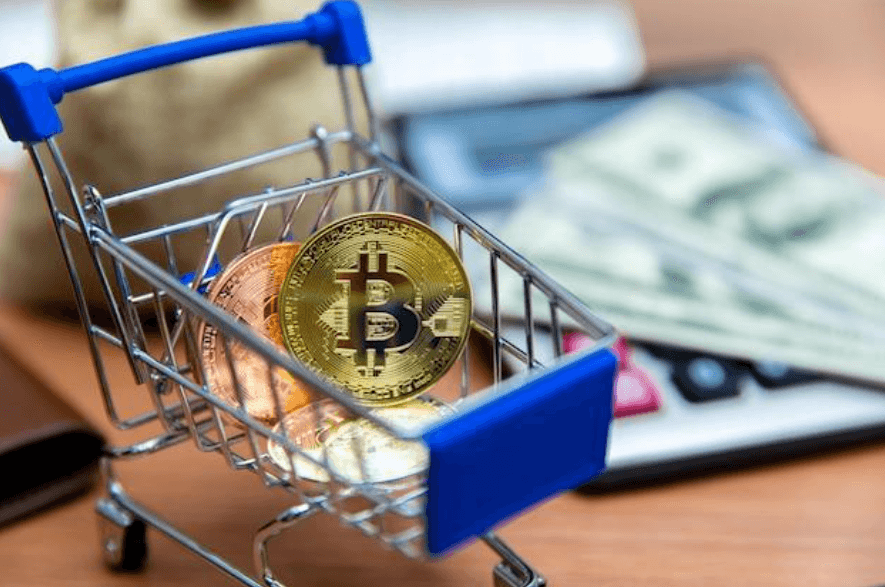
Bitcoin, a type of digital money or cryptocurrency, is not regulated by any official bank or government. Instead, it’s traded via an open marketplace. As such, its price at any given moment is simply the latest sum of money someone traded for it. Its value, though, is different: while some investors say that bitcoin’s intrinsic value is higher than its current market value, others disagree.
Here’s what you need to know about bitcoin: including how its price gets set, how to define its value, and how to get your own hands on some of it.
What determines the price of bitcoin?
Bitcoin’s price is determined by its market demand. In other words, when more people are buying than selling, bitcoin’s price will go up. But when more people are selling than buying, its price will go down. If this concept sounds familiar, it’s because it’s the basic pricing principle for everything from the stock market to real estate.
When someone buys bitcoin on the open market, the amount they paid for it is bitcoin’s current value. You can find bitcoin’s most recent price through a public blockchain explorer or a platform like CoinMarketCap. Depending on where you look, you may see different prices—some exchanges are independent and only offer bitcoin transactions to members, so their prices will differ from the open market. Sometimes, this can be a good way to get bitcoin for a cheaper price, as you might be able to bypass network fees or just get a lower price than on the open market.
Just like the stock market, bitcoin has a maximum supply. That number is 21 million coins, nearly 19 of which have been created.
What’s the difference between bitcoin’s price and its value?
Bitcoin’s “value” refers to its current price, but its valuation, or intrinsic value, is different. While its value can be found simply by looking at the latest transaction, determining valuation is a more complicated, analytical process.
To determine the valuation of a stock, analysts look at the company’s financial performance and prospects in the stock market. They then quantify these results and rate them using established metrics to figure out the stock’s intrinsic value. By comparing these metrics to other stocks, analysts can determine relative value.
Similarly, you can compare bitcoin to other cryptocurrencies to establish its relative value. Comparing stocks and bonds to bitcoin isn’t as effective, though, as these are drastically different forms of investment.
In terms of how valuable bitcoin is to you personally, that depends on your investment goals, risk tolerance, and ROI. Generally, its value to you is the price you’re willing to pay for it. In other words, how much would you pay for bitcoin that meets your investment goals, matches your risk tolerance, and brings a high return? That number is bitcoin’s value to you.
What factors affect bitcoin’s price?
Because bitcoin is still so new, its future remains uncertain. While it has been around for a decade, most other forms of investment have been around much longer and have more statistics to draw on. Bitcoin also doesn’t have the same regulations as older forms of investment, nor does it have the legal and privacy protections that U.S. dollar-based securities have. As such, the main thing that could have the biggest impact on bitcoin is government action. If governments like the U.S. decided to start regulating bitcoin, that could affect its value and availability.
Some of the U.S. governing bodies that might start regulating bitcoin in the future include:
The Federal Trade Commission
The Commodity Futures Trading Association
The Securities and Exchange Commission
Non-governmental influences could also have an impact. For example, Elon Musk and Catherine Wood (Ark Invest’s CEO) are both advocates of bitcoin who can affect market prices through something as simple as social media posts. Bitcoin whales, or early investors who now have large bitcoin holdings, can also affect market prices if they take part in especially large transactions.
Bitcoin’s price can fluctuate drastically. For instance, in October 2021, a single bitcoin sold for $66,878. By May 2022, though, that price had fallen to around $30,000. This was a grim prospect for bitcoin investors, but as of July 2024, the price has risen to an even higher number: $66,993.75. Because bitcoin’s price can change hourly, there’s no knowing how long that price will stick.
As you’ve no doubt guessed by now, investing in bitcoin can be risky. While it’s possible to get a big return on your investment, it’s also possible to lose everything. But if you limit your bitcoin spending and diversify by investing in other securities as well, you should be OK.